Navigating Utility Capacity for DC Fast Charging: A Strategic Approach with EVlogic
Jan 22, 2026
Navigating Utility Capacity for DC Fast Charging: A Strategic Approach with EVlogic
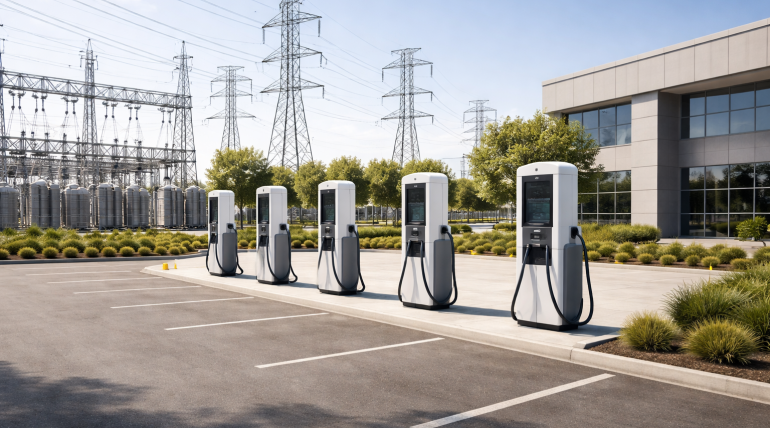
The imperative to electrify transportation is driving an unprecedented demand for electric vehicle (EV) charging infrastructure, particularly DC Fast Charging (DCFC). DCFC stations are critical for rapid top-ups and long-distance travel, making them a cornerstone of any robust EV network. However, for Charge Point Operators (CPOs), electric utilities, logistics companies, commercial real estate developers, and multifamily property owners, deploying DCFC is often fraught with significant challenges, primarily centered around utility capacity and interconnection.
The journey from concept to commissioning for a DCFC site can be lengthy and unpredictable. Manual site assessments, opaque utility data, and protracted interconnection processes frequently lead to project delays, unforeseen costs, and missed market opportunities. Projects can stall for months, even years, while waiting for utility studies or grid upgrades. This traditional approach is no longer sustainable in a market demanding expedited deployment and scalable solutions.
The Challenge: Unlocking DCFC Potential Amidst Utility Constraints
DC Fast Charging requires substantial power. A typical DCFC station can draw anywhere from 50 kW to 350+ kW per charger, and multi-charger hubs can easily exceed several megawatts of demand. This high power draw places immense strain on existing electrical infrastructure. Key challenges in planning and deploying DCFC include:
- Utility Capacity Limitations: Many potential sites, while geographically ideal, lack the immediate grid capacity to support significant DCFC loads without costly and time-consuming upgrades to transformers, feeders, or substations.
- Opaque Interconnection Processes: Navigating utility interconnection queues and requirements can be a labyrinthine process. A lack of transparent data on available capacity, upgrade costs, and timelines often leaves developers blind-sided by unexpected delays and expenses.
- Inaccurate Cost Estimation: Without precise utility data, generating an accurate Rough Order of Magnitude (ROM) price for DCFC projects is nearly impossible. This leads to budget overruns, strained financing, and project cancellations.
- Protracted Development Timelines: From initial application to final energization, the utility interconnection phase is frequently the longest pole in the tent, extending project cycle times by months or even years.
- Risk of Stranded Assets: Investing heavily in site acquisition and design only to discover insurmountable utility hurdles can result in significant financial losses.
These challenges underscore the critical need for a more intelligent, data-driven approach to DCFC deployment.
The EVlogic Solution: Intelligent Utility Capacity Planning for DCFC
Built by pioneers with 15+ years of experience in EV infrastructure development for industry leaders like FedEx, Mercedes-Benz, and EVgo, EVlogic understands these pain points intimately. Our specialized software platform is engineered to streamline the entire DCFC deployment lifecycle, particularly by demystifying and accelerating the critical utility capacity planning phase.
EVlogic empowers professionals to make informed, strategic decisions at an expedited pace by offering:
- Integrated Utility Data Intelligence: EVlogic goes beyond surface-level analysis. Our platform integrates directly with utility data sources, providing granular insights into available grid capacity, substation proximity and loading, and the electrical service infrastructure at a specific site. This proactive data access allows for early identification of potential bottlenecks and realistic assessment of upgrade requirements.
- Advanced Feasibility Assessment Tools: Our tools rapidly evaluate a site’s suitability for DCFC by analyzing power availability alongside spatial constraints, local regulations, and potential energy demands. This ensures that only viable sites with manageable utility requirements progress through the development pipeline, saving time and resources.
- Precise ROM Pricing with Utility Integration: Say goodbye to speculative estimates. EVlogic dynamically generates highly accurate ROM pricing by incorporating not only equipment and installation costs but also critical utility interconnection fees and estimated upgrade expenses. This comprehensive financial foresight allows CPOs and developers to budget reliably and secure financing with confidence.
- Dynamic Scenario Planning: Model different DCFC configurations – from varying power levels (e.g., 150 kW vs. 350 kW) to the number of charging stalls – and instantly visualize their impact on utility demand and associated costs. This capability enables optimized network design that balances performance requirements with grid constraints.
- Accelerated Utility Engagement: By providing a clear, data-backed understanding of a site's utility demands and potential upgrades, EVlogic arms developers with the information needed to engage utilities proactively and efficiently, often shortening pre-application and study phases.
Industry Impact: Faster Deployment, Lower Risk, Smarter Networks
Leveraging EVlogic's platform for DCFC deployment translates into tangible benefits across the EV ecosystem:
- Reduced Cycle Times for DCFC Projects: Proactively identifying and addressing utility challenges in the early stages compresses the development timeline, from initial site selection to project energization. This means faster market entry and quicker returns on investment for charging network operators.
- Significant Reduction in Financial Risk: Accurate ROM pricing that includes comprehensive utility upgrade estimates eliminates costly surprises, allowing for more precise budgeting and investment decisions.
- Optimized Capital Allocation: By quickly identifying sites with favorable utility conditions and avoiding those with prohibitive upgrade costs, stakeholders can strategically deploy capital where it yields the best return and fastest path to operation.
- Strategic Network Development: Plan DCFC networks that are not just geographically convenient but also electrically feasible and cost-effective, building resilient infrastructure for the long term.
- Empowered Collaboration: Provide a unified, data-driven platform for internal teams, utility providers, and engineering partners, fostering clearer communication and more efficient project execution.
Technical Details: How EVlogic Deciphers Utility Data for DCFC
The power of EVlogic lies in its sophisticated algorithms and comprehensive data architecture designed to tackle the complexities of utility capacity for DCFC:
- Site-Specific Data Ingestion: Users input site addresses or geo-locate properties on an interactive map. EVlogic then correlates this with publicly available utility service territory data and, where integrated, proprietary utility datasets.
- Load Profile Modeling: Based on proposed DCFC power levels, number of stalls, and anticipated usage patterns, the platform generates dynamic load profiles. These profiles account for peak demand, daily energy consumption, and future scalability needs.
- Electrical Infrastructure Analysis: EVlogic evaluates the existing electrical service at the site, including meter size, panel capacity, and transformer ratings. This is cross-referenced with the modeled DCFC load to determine if existing infrastructure can support the demand or if upgrades are necessary.
- Substation & Feeder Assessment: The platform analyzes the proximity and available capacity of upstream infrastructure, such as distribution feeders and substations. This is critical for predicting whether a simple service upgrade will suffice or if more extensive, higher-cost infrastructure improvements (e.g., new feeder lines, substation upgrades) will be required.
- Automated Upgrade Prediction & ROM Costing: Leveraging a vast database of real-world project costs and utility tariffs, EVlogic automatically estimates the scope and cost of necessary utility upgrades. This includes line extensions, transformer replacements, switchgear additions, and interconnection study fees. These estimates are continually refined based on thousands of analyzed sites, offering unparalleled precision.
- Product Compatibility & System Design: The platform integrates with a vetted library of DCFC chargers and associated electrical equipment (e.g., energy storage systems for demand charge management) to ensure compatibility and provide accurate equipment costs within the ROM estimate.
This integrated and intelligent analysis provides a holistic view of a site's DCFC potential, grounded in actionable utility data.
Case Study Snippet: Strategic DCFC Network Expansion for a CPO
A regional Charge Point Operator (CPO) planned to expand its DCFC network by 20 new sites over two years. Their initial approach involved identifying high-traffic locations, securing property agreements, and then initiating utility interconnection requests—a process that often led to unexpected delays of 6-18 months per site due to unforeseen utility upgrade requirements.
By integrating EVlogic into their development workflow, the CPO transformed their strategy:
- They used EVlogic’s feasibility tools to screen hundreds of potential sites, instantly filtering for those with favorable utility capacity and manageable interconnection paths.
- For the top 50 promising sites, EVlogic generated preliminary ROM pricing, accurately forecasting utility upgrade costs, which ranged from a few hundred thousand dollars to over a million per site. This allowed them to immediately prioritize sites with lower utility burdens.
- The platform enabled them to model different DCFC power levels and charger quantities for each site, identifying the optimal configuration that balanced desired charging speeds with available grid capacity, sometimes suggesting a slightly lower power level or phased deployment to avoid massive utility upgrades.
- Within three months, the CPO had a fully vetted development roadmap for all 20 sites, with accurate budgets and significantly reduced anticipated utility interconnection timelines. The data provided by EVlogic allowed them to engage utilities with pre-vetted proposals, accelerating approvals and reducing overall project cycle time by an average of 40% across the network.
Conclusion: Build Smarter, Deploy Faster with EVlogic
The electrification revolution demands a proactive, data-driven approach to DCFC infrastructure development. EVlogic's platform, built on deep industry expertise and proven methodologies, provides the critical intelligence needed to navigate complex utility landscapes. By transforming opaque utility processes into clear, actionable insights, we empower CPOs, utilities, fleet operators, and property developers to build smarter, deploy faster, and scale their DCFC networks with confidence. Stop letting utility capacity be a roadblock; turn it into a strategic advantage.
Schedule a Platform Walkthrough to discover how EVlogic can accelerate your DCFC deployment strategy.
FAQ
How does EVlogic source its utility data?
EVlogic integrates with a combination of publicly available utility service territory data, GIS mapping, and, where partnerships exist, direct feeds from utility providers. This allows us to provide a comprehensive, site-specific analysis of grid capacity and infrastructure details.
Can EVlogic help with specific utility interconnection applications?
While EVlogic provides the crucial data and cost estimations needed for interconnection applications, it does not directly submit applications. Our platform arms you with the detailed technical and financial information necessary to prepare robust applications and engage effectively with utilities, significantly streamlining the process.
What's the difference between DCFC and Level 2 in terms of utility impact?
DCFC (Direct Current Fast Charging) requires significantly higher power draw (typically 50 kW to 350+ kW per charger) and directly impacts the site's electrical service and upstream utility infrastructure. Level 2 charging (Alternating Current), generally ranging from 3 kW to 19.2 kW per port, has a much lower power demand and is less likely to trigger extensive utility upgrades unless deployed in very large quantities.
How accurately can EVlogic predict utility upgrade costs?
EVlogic generates highly accurate ROM (Rough Order of Magnitude) estimates for utility upgrade costs by leveraging a vast database of real-world project data, utility tariffs, and engineering specifications. While these are estimates and final costs can vary based on specific utility requirements and site conditions, our data-driven approach offers a level of precision that significantly reduces financial surprises compared to traditional methods.
Does EVlogic account for demand charges and load management strategies?
Yes, EVlogic’s platform can model the impact of demand charges based on projected load profiles and local utility tariffs. It also allows for scenario planning that incorporates load management strategies or energy storage solutions to mitigate peak demand and optimize operational costs for DCFC deployments.