Mastering Utility Capacity for Commercial EV Charging: A Feasibility Deep Dive
Jan 13, 2026
Mastering Utility Capacity for Commercial EV Charging: A Feasibility Deep Dive
As the electric vehicle (EV) revolution accelerates, the demand for robust charging infrastructure at commercial properties, fleet depots, and multi-unit developments is soaring. However, the path to deploying these essential charging stations is often fraught with a significant, yet frequently underestimated, hurdle: utility capacity. Ignoring this critical factor early in the planning stages can lead to costly delays, extensive infrastructure upgrades, and even project cancellations. For Charge Point Operators (CPOs), fleet managers, and commercial real estate developers, understanding and planning for utility capacity is paramount to successful, scalable EV charging deployments.
The Stakes: Why Utility Capacity is Your Project's Foundation
Imagine investing heavily in site acquisition, equipment procurement, and design, only to discover that the local electrical grid cannot support your planned charging load without a substantial, time-consuming, and expensive service upgrade. This scenario is all too common. The existing electrical infrastructure at many commercial sites was simply not designed to handle the massive, sustained power draw of multiple DC Fast Chargers (DCFC) or even a large bank of Level 2 chargers. Without adequate utility capacity, your project faces:
- Prolonged Timelines: Utility service upgrades and interconnection processes can take months, sometimes even years, to complete, significantly extending your project cycle time.
- Budget Overruns: The costs associated with upgrading transformers, switchgear, electrical panels, and extending utility lines can easily reach six or seven figures, impacting your project's return on investment (ROI).
- Operational Constraints: Insufficient capacity may force you to de-rate chargers or limit simultaneous charging, compromising user experience and fleet operational efficiency.
Proactive EV charger utility capacity planning isn't just about avoiding problems; it's about laying a resilient and scalable foundation for your EV infrastructure.
The EVlogic Solution: Streamlining Utility Capacity Assessment
EVlogic was founded by industry pioneers who understood these real-world challenges. Our platform directly addresses the complexities of utility capacity by integrating crucial data and providing actionable insights. We empower CPOs, utilities, and property owners to make informed decisions without getting bogged down in contractor bid cycles or endless preliminary engineering reports.
How EVlogic Accelerates Capacity Planning:
- Data-Driven Feasibility Assessment: Our tools allow for comprehensive commercial EV charging feasibility studies that incorporate utility service data. This means identifying potential capacity constraints and required electrical infrastructure upgrades from the earliest stages of site evaluation.
- ROM Pricing for Make-Ready Costs: Generating a Rough Order of Magnitude (ROM) price for utility make-ready costs and service upgrades is critical. EVlogic's platform provides realistic cost estimates for new electrical panels, switchgear, and the necessary service extensions, giving you budget clarity upfront.
- Load Calculation & Grid Impact Analysis: EVlogic utilizes utility capacity maps to quickly assess if the line or substation can meet your project's load requirements. We also provide load calculations, single-line drawings, and panel schedules to submit to utilities to initiate the engineering process when this data isn't readily available. This proactive approach helps anticipate the grid impact and identify where service upgrades or demand management strategies might be necessary. The National Renewable Energy Laboratory (NREL) highlights the importance of managed EV charging to improve grid reliability and utilization.
- Accelerated Design-Build Planning: By providing clear data on utility requirements and designing sites with load management considerations, EVlogic significantly reduces the preliminary design phase, leading to an expedited pace for your overall project.
Industry Impact: Informed Decisions, Faster Deployment
With EVlogic, stakeholders across the industry can:
- For CPOs: Rapidly assess potential sites for profitability and viability, understanding the true cost of utility interconnection before significant investment.
- For Utilities: Better anticipate demand from new charging deployments, aiding in grid modernization and resource allocation.
- For Commercial Real Estate/Multifamily: Attract tenants and customers with well-planned charging amenities, confident in the electrical infrastructure's ability to support current and future needs.
- For Fleet Operators: Develop scalable development plans for depot charging that account for the long-term growth of their electric fleet, avoiding expensive retrofits.
Technical Details: Decoding Electrical Infrastructure
Understanding utility capacity often involves navigating a lexicon of electrical terms:
- Load Calculations: Determining the total electrical demand of your proposed EV chargers, factoring in charger type (Level 2 vs. DCFC), quantity, and usage patterns. This helps size your incoming service appropriately and to see if planned loads exceed existing capacity.
- Make-Ready Costs: Expenses incurred to bring the electrical service to a point where chargers can be installed. This includes trenching, conduit, wiring, and foundation work, often extending from the utility transformer to your site's main electrical panel.
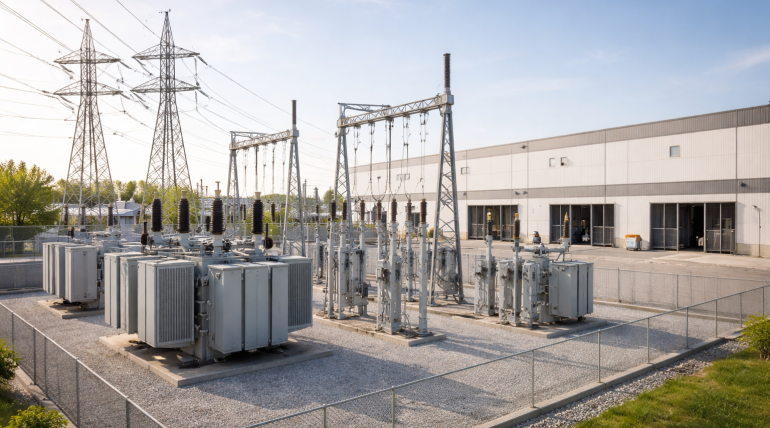
- Service Upgrade: Increasing the amperage or voltage of the electrical service provided by the utility. This can involve new transformers, larger utility lines, and an upgraded meter.
- Electrical Panel & Switchgear: These are the central distribution points for electricity on your property. EV charging often requires significant upgrades or entirely new panels and switchgear to safely manage the increased load.
EVlogic's platform helps you visualize these components and understand their implications on your project, ensuring your vetted design is both technically sound and cost-effective.
Case Study Snapshot: Avoiding a Multi-Million Dollar Surprise
A logistics company planning a large fleet charging depot initially estimated their electrical costs based on standard commercial rates. Using EVlogic, their team quickly ran a feasibility assessment. The platform's utility data integration immediately flagged a critical issue: the nearest utility substation was operating at near capacity, and a major service upgrade, including a new dedicated transformer and a mile of new underground feeders, would be required. The ROM pricing generated by EVlogic for this upgrade was in the multi-million dollar range, dwarfing the initial electrical budget. This early identification allowed the logistics company to pivot to an alternative site with significantly better existing utility infrastructure, saving them years of delay and millions in unforeseen costs. This proactive approach underscores the value of an early, data-driven feasibility assessment.
For more insights into the broader context of EV charging infrastructure development, explore our post on EV Charging Market Trends and Insights.
Frequently Asked Questions (FAQ)
Q1: What is the first step in assessing utility capacity for an EV charging project?
The first step is to design your site in EVlogic to determine what you can build, how much it will cost, and how much power the project requires. Once everyone has agreed on the approach, then a detailed site validation can be performed as described in the previous answer.
Q2: How long does a typical utility service upgrade take?
Project timelines for utility service upgrades vary significantly based on the scope of work and the utility's specific processes. Simple upgrades might take 3-6 months, while complex projects involving new substations or extensive line extensions could take 12-24 months or even longer. Early engagement with the utility and a clear understanding of requirements, facilitated by tools like EVlogic, can help mitigate these timelines. You can also review local regulations, such as those discussed in our article on EV Charging Regulations in California, which may offer permitting streamlining acts.
Q3: What are "make-ready" costs, and how do they differ from charger installation costs?
"Make-ready" costs refer to the expenses associated with bringing electrical infrastructure to the point of connection for the EV chargers. This includes site work, conduit, wiring, upgraded panels, and utility service extensions. Charger installation costs, in contrast, specifically cover mounting the charging equipment, connecting it to the prepared electrical supply, and commissioning. Make-ready costs often represent a significant portion of the total project budget.
Q4: Can smart charging or energy management systems help mitigate utility capacity issues?
Yes, absolutely. Smart charging solutions allow for dynamic power distribution, load balancing, and scheduling of charging sessions during off-peak hours. EVlogic can help build sites with a variety of load management strategies that optimize the use of existing capacity, potentially reducing the immediate need for extensive service upgrades. These strategies are increasingly vital for large-scale deployments.
Q5: Is it possible to get a ROM pricing estimate for utility upgrades without engaging an electrical engineer?
While a detailed engineering study is eventually required, current practices for obtaining accurate ROM pricing for utility upgrades can vary across different regions. Platforms like EVlogic can provide some insights early in the process; however, engaging qualified professionals is essential for the final assessments.
---
Ready to streamline your EV charging infrastructure planning and master utility capacity challenges? Request a Demo of EVlogic today.